



Aluminum foil fiberglass cloth tape adds a woven reinforcement layer to a reflective foil-facing construction. The cloth helps the tape resist tearing during handling, making it useful for HVAC insulation seams, pipe jackets, equipment covers and repair work where plain foil may be easily punctured.
The reinforced surface does not remove the need for correct adhesive selection. Temperature, vapor control, substrate coating and indoor or outdoor exposure still determine whether a roll is suitable.

A reinforced foil face offers greater handling strength around ducts and insulation jackets.
Understand The Laminate
The visible aluminum layer provides a reflective, cleanable surface. Fiberglass cloth supports the foil against tearing. The adhesive anchors the laminate to facing, metal or other approved substrates, while a liner may protect high-tack constructions until installation.
Choose Reinforcement For The Worksite
Plain foil tape is often adequate for smooth indoor duct seams. Reinforcement becomes valuable when installers wrap curved pipe insulation, bridge damaged jacket edges, pull tape under tension or work around sharp sheet-metal details.
| Use Case | Desired Property | Buyer Question |
|---|---|---|
| Duct insulation seam | Clean foil finish | Is the adhesive compatible with the facing? |
| Pipe jacket repair | Tear resistance around curves | Can the backing conform without buckling? |
| Equipment cover | Abrasion and handling strength | What reinforcement weight is supplied? |
| Warm service area | Stable bond after heat exposure | What test supports the service range? |
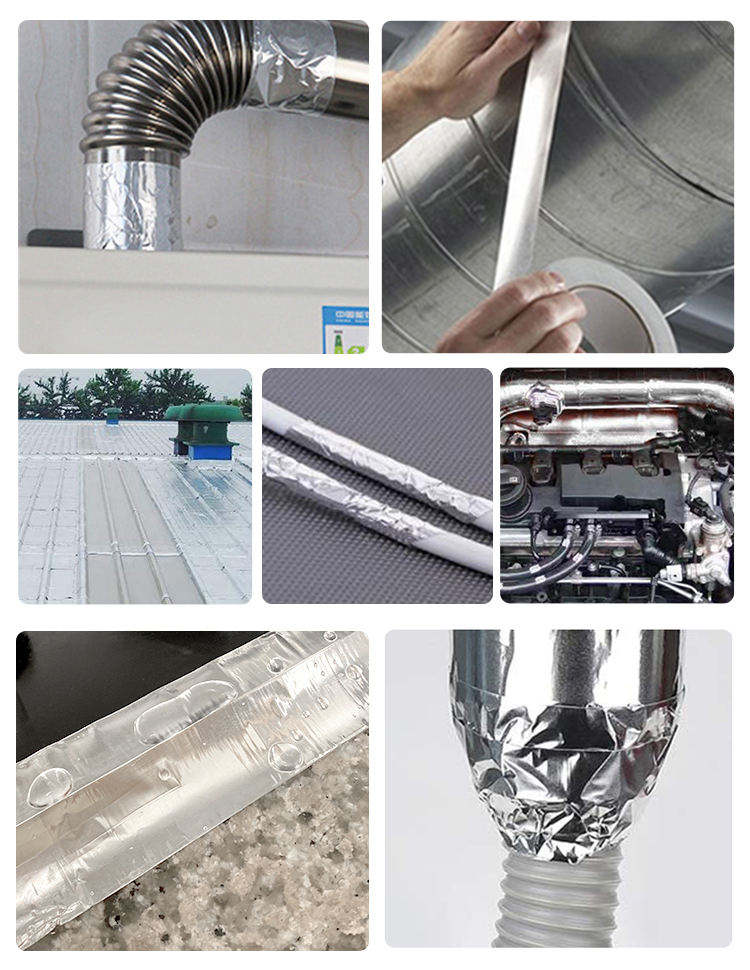
Backing construction influences tear resistance, flexibility and finished appearance.
Check Adhesive Chemistry
Acrylic adhesive is common where aging, temperature resistance and a clean bond are priorities. Rubber-based systems can provide fast initial grab. Butyl-based layers add gap filling and waterproof sealing. Do not compare these chemistries by tack alone; identify the surface and service environment first.
Prepare Insulation Facings Carefully
Brush away fibers and dust without damaging the facing. Remove condensation, oil and release residue. Align the seam so the tape is not forced to hold two separated panels together. Apply along the centerline and smooth outward to avoid trapped air.
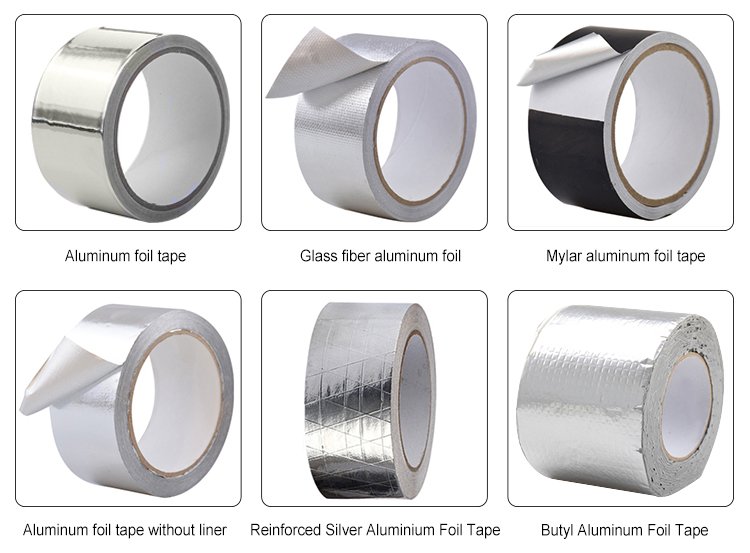
Full pressure contact is more important than simply placing the tape over the joint.
Test Heat And Moisture Exposure
Condition a sample on the real facing, then inspect peel, edge curl and adhesive transfer after the expected temperature cycle. For vapor-barrier work, evaluate continuity at overlaps, penetrations and terminations rather than testing a flat strip alone.
Purchase Specification Checklist
- Foil thickness and fiberglass cloth construction.
- Adhesive family, coating weight and liner type.
- Total thickness, width, length and core dimensions.
- Application and continuous-service temperature.
- Roll winding, edge quality and splice allowance.
- Carton protection, labels and lot traceability.
FAQ
Is Fiberglass Cloth Tape The Same As Plain Aluminum Tape?
No. Cloth reinforcement changes tear strength and handling behavior.
Can It Be Used On Hot Pipes?
Only within the documented temperature range and on a compatible insulation jacket. Test the complete construction.
Does Reinforcement Make The Tape Waterproof?
Water resistance depends on the whole laminate, adhesive and sealed overlap, not the fabric alone.
Can Rolls Be Slit To Custom Widths?
Custom converting is commonly available for appropriate quantities and tolerance requirements.
Selection Summary
Use reinforced foil tape where installation stress or service handling could tear a plain facing. Review Zhonghao's aluminum foil fiberglass cloth tape and aluminum foil tape pages to compare backing and adhesive options.