



Before ordering a roll, put the window frame back in the opening with no tape behind it. Do not tighten the screws. Hold the frame where it naturally sits and look at the four corners. If one corner stays proud, tape size is not yet the main problem.
A bent flange, a soft wall or a trim ring that cannot reach will still be there after the new seal is fitted. This dry check takes a few minutes and can save a second removal.
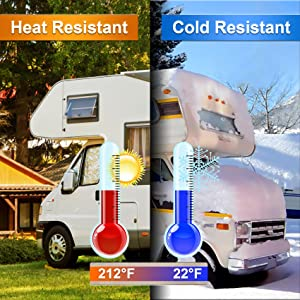
Measure the part that can actually seal
The outside width of the frame is not useful here. Measure the flat land behind the flange and leave out screw holes, rounded edges and drain slots. A flange may appear to give 14 mm of contact, but if a screw hole uses 3 mm and the outer 2 mm curves away, only 9 mm remains dependable.
That example does not automatically mean "buy 8 mm tape." Check the narrowest corner as well. On corrugated aluminium siding, check the valleys. Smooth fiberglass usually presents a simpler joint, although an old repair can leave local high spots.
| What you see during the dry fit | What to check before choosing tape |
|---|---|
| The frame rocks | Opening shape and flange damage |
| One corner will not sit down | Local gap and screw reach |
| The strip would cross a slot | The real drain route |
| The wall moves under light pressure | Substrate repair, not a thicker seal |
Zhonghao lists 6, 8, 10, 20, 30, 40 and 50 mm widths, with thicknesses from 0.6 to 5 mm. Those are available sizes, not a vehicle chart. Width follows the usable land. Thickness depends on the gap, the wall texture and how far the frame can compress without bowing.
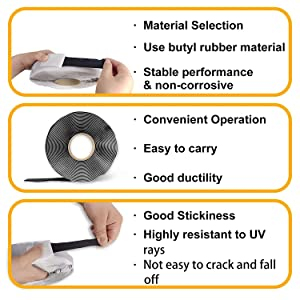
There is a tempting shortcut here: choose a thick section because it looks safer. It may instead hold the frame away from the wall. A short trial on the worst corner gives a better answer than matching the tape to the camper model name.
Bring the frame down slowly
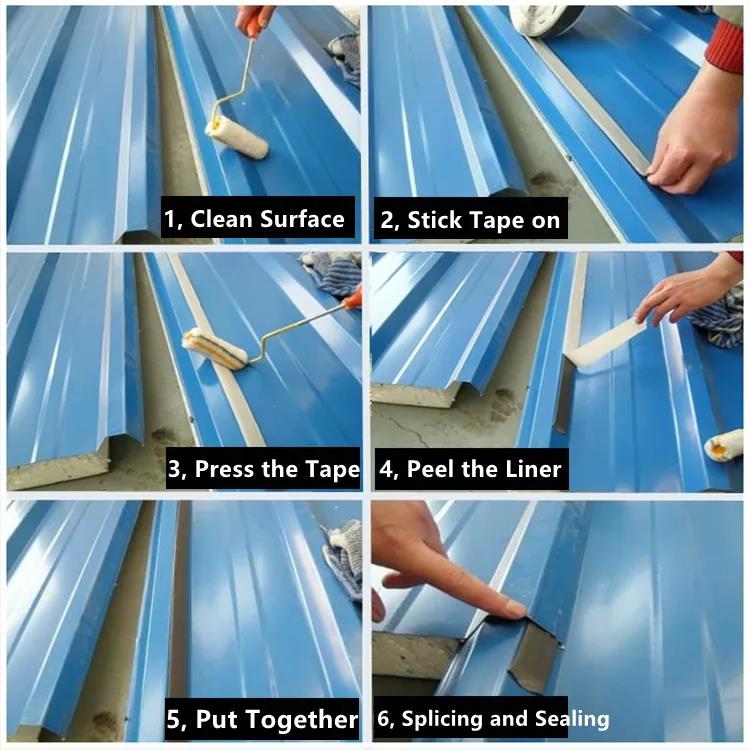
Remove loose bedding, dust and oily residue. Lay the RV window butyl tape without pulling it longer. At the corners, form the strip with your fingers; stretching it makes exactly the place most likely to leak thinner.
One person can hold the outside frame while the inside screws are brought up a little at a time. Watch the line of the flange. A large bead of squeeze-out beside one screw does not prove that the section between screws is closed. If the frame starts to bow, stop. More torque is not a sealing method.
For the trial record, note the tape width and thickness, room temperature, screw condition and how the liner released. Colour belongs on the record too if the edge remains visible. Grey, white and black can look surprisingly similar in workshop lighting.
Test a small area, then move upward
Use a gentle water flow at the bottom edge first. Wet one short section and have someone watch from inside. Then move upward. Starting with a pressure washer makes the result difficult to interpret and may push water into a joint that is sound in normal rain.
If water appears at a lower corner, do not assume that corner is the entry point. It may have travelled from a body seam above the window. Leave the inside trim off until the route is clear.
For nearby jobs, compare RV repair tape, RV putty sealant, general RV butyl tape, roof repair tape, RV roof tape and the wider butyl tape range. If the fit is unusual, send the flange width, gap, wall material, screw spacing and one loose-fit photograph to sample support.
Questions that come up during refitting
Can I stretch the tape around a corner? No. Form it at its supplied section so the corner does not become a thin spot.
Should all old bedding be removed? Remove loose, dirty and uneven material. Any material left behind must be sound and allowed by the repair method.
Does more squeeze-out mean a better seal? Not by itself. Check the whole flange, especially the spaces between fasteners.
Why can a new seal still leak? A drain may be blocked, or the water may be entering above the window and travelling inside the wall.
What should stay with an approved sample? Keep the size, colour, roll lot, installation temperature, compression notes and water-test result. That record is much more useful on the next vehicle than the model name alone.