



Double Sided Tape
Why Choose Us?
Rich Experience
With nearly 10 years of field experience, Zhonghao products are engineered for superior performance and ease of installation.
Professional Technical Team
We have more than 10 years of experience professional technique talents, provide pertinence solutions according to client's different kinds of requirements, and strictly with each producing process.
Professional Service
Free samples and typesetting adjustment for tapes, 3 days for customized samples, and 7 days for production order. And we provide full-time service when you have a problem during using of the tapes.
Widely Popular
Due to our economic solution and reliable quality performance, our tapes are popular all over the world, especially in South and East Asia, Europe, and America.
What is Double Sided Tape?
Created by applying a thin adhesive layer to each side of a carrier substrate material, double-sided tape, also known as double-coated tape or double-faced tape, is widely used by a vast array of industries for applications such as bonding, holding, mounting, splicing, and packaging. Obviously, it is most often used to stick two surfaces together; typically in a way not visible in the end product. This is due to it being installed “in-between” rather than “overlaying upon” in use.
-
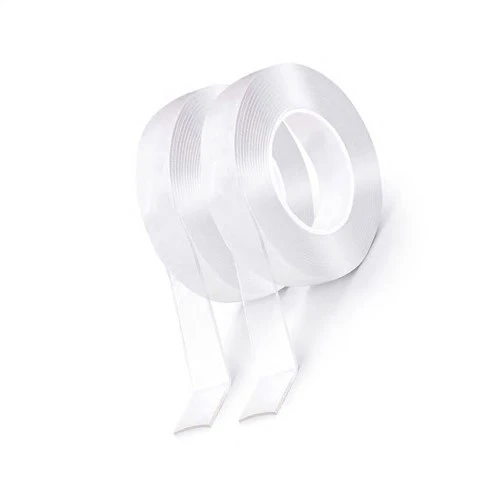
![Nano Double Sided Tape Heavy Duty]() Nano Double Sided Tape Heavy DutyProduct description NanoTape is made of soft gel,which own removable,reusable,washable,no residue features. There are 2 type,one is both two side are removable and reusable, anote is one side is...read more
Nano Double Sided Tape Heavy DutyProduct description NanoTape is made of soft gel,which own removable,reusable,washable,no residue features. There are 2 type,one is both two side are removable and reusable, anote is one side is...read more -
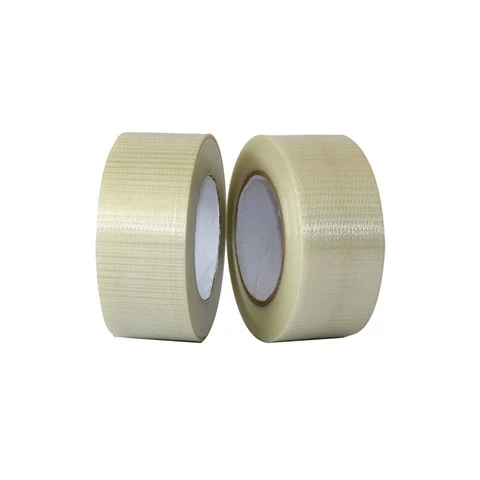
![Heavy Duty Transparent Reinforced Fiberglass Tape]() Heavy Duty Transparent Reinforced Fiberglass TapeThe reinforced fiberglass yarn provides the filament tapes high tensile strength; the PET film backing provides excellent abrasion and moisture resistance. The proper packaging-grade adhesive is...read more
Heavy Duty Transparent Reinforced Fiberglass TapeThe reinforced fiberglass yarn provides the filament tapes high tensile strength; the PET film backing provides excellent abrasion and moisture resistance. The proper packaging-grade adhesive is...read more


Advantages of Double Sided Tape
High peel adhesion
It's the strength required to remove a pressure-sensitive adhesive from its backing material or any given surface. High peel adhesion in industrial double side tapes is fundamental in permanent applications because it provides excellent resistance.
Immediate support strength
Double sided tape has infinite industrial uses mainly because of its strength: it ensures not only high resistance but also immediate effects. From the moment you apply the tape on the surfaces that need to be bonded or mounted, you can rest assured that there is no time to wait for the adhesive to be effective.
Easy and fast application
Immediate support strength is closely related to easy application. In fact, since industrial 2 sided tapes don't require long drying periods, they offer quick use on each and every occasion. This makes them a time-efficient solution in situations that require multiple applications of this tape.
Versatility
Double sided tapes can easily adapt to multiple surfaces. According to the surface energy of a specific material – which is the excessive force present on the surface in comparison to the bulk of the material – it is recommended to use the right adhesive with the most suitable peel adhesion and tensile strength.
Ability to bond dissimilar materials
Industrial two sided tapes' versatility also means that they are able to bond or mount dissimilar materials. In fact, you can use two different adhesives on each side or use a tape with a specific thickness that can work with surfaces that have distinct characteristics.
Improved aesthetic results
Finally, since they are not visible on the bonded surfaces, industrial double sided tapes offer improved aesthetic features. When using this solution, you can be sure that the tape stays hidden between the two materials.
Types of Double Sided Tape
Foam Tapes
Double Coated foam tapes are composed of open or closed cells and are usually protected with an acrylic adhesive on each side. Foam tapes are suitable for mounting functions, gasket applications, sound dampening or even thermal damage purposes. Also these tapes are proof against a wide variety of temperature applications.
Cloth Tapes
Commonly, double coated cloth tapes characteristic a flexible again, and often the adhesive generally may have a heavy coating, which is right for irregular and multiple floor applications. General uses for this form of tape consist of carpet set up with carpet tape by exhibition expert. Those tapes are green for their smooth unwind functionality.
Paper Tapes
Generally double coated paper tapes are coated on every side with a rubber adhesive and are regularly used for standard motive bonding applications and in which temporary holds are required. Those tapes are also efficient for bonding irregular surfaces. Tape liners are available in specific colors. Variations of this type of tape can be resistant to certain chemical substances. Moreover, paper tapes can be applied manually or with an applicator.
Adhesive Transfer Tape
Double coated adhesive transfer Tape has a solvent based totally acrylic adhesive encouraged for bonding to a variety of merchandise and for laminating to a variety of substances. It offers dimensional stability and has die cut capabilities. These adhesion products are suitable to high-quality and are appropriate for a broad variety of temperatures, and are resistant to UV light. Adhesive transfer tapes are specially using in market for mounting, splicing, and for closure.
Tissue Tape
Double-sided tissue tapes are well designed with long lasting adhesive and smooth to address so it saves treasured processing time and decreases price by actually eliminating breakage. These tapes are flexibility and durability due to the heavy responsibility release liner that contributes brought strength, making double-sided tissue tape converter friendly.
Film Tape
Double-sided film tape presents super adhesion to an expansion of surfaces and is ideal for permanent bonding and mounting packages. The selection of vinyl and polyester backings permit for utilization in a huge variety of temperatures.
Mounting Tape
Double-sided mounting tape is a polyethylene foam tape with stress sensitive adhesives on each surface, protected by using a silicones paper liner that is the best manner to position up mirrors and heavy objects without having to use nails or screws. The best excessive tack adhesive combines high-quality tack with load-bearing houses for interior applications to numerous substrates including plastics, polycarbonate, pc, pe, ps, glass, wood, metals and many others.
Polyester Tape
The double sided polyester tapes are specially constituted of solvent adhesive to resist heat, cold, water, solvent and excessive or low peel adhesion. These tapes are using for its excessive tensile energy, chemical and dimensional stability, transparency, reflectivity, gas and electric insulation. It’s far designed to paste surfaces collectively, often in a way which isn’t always visible ultimately product, because of it being in among the objects in preference to protecting them.
Application of Double Sided Tape
Interestingly, for years, double-sided tapes have been replacing rivets and fasteners in the auto manufacturing industry. They are used to attach everything, from car dashboards to specialty car appliqués. Another thing is that RV and truck manufacturers use specialized double-coated tapes to fasten panels together and bond exterior glass mirrors to the mirror casing bezel.
Housebuilders use double-sided tape to overlap house wrap seams so that the water does not migrate behind them. In order to reduce labor, better apply a high-performing double-sided tape to attach vapor barriers to walls in crawlspaces rather than using screws for a more air-tight seal.
Each trade show events technically use and lays down temporary carpet, and guess what they use to ensure that the carpet is attached to its place - double-sided tape! The tapes generally used in this type of application are a medium adhesion and tack, allowing for removal without leaving any residue.
With more buildings becoming packed and airtight, the sound is becoming a big deal. Surprisingly, double-sided tape is utilized in producing foams that can be attached to wall panels or flooring underlayment to the ground.
Double-sided layered tapes are very important in the production of paper mills and paper corrugators.
It is not a surprise to know that double-coated tape is the go-to tool of this industry. What you need to know is to choose the best type of adhesion based on your requirements since there are various adhesion levels. Let us discuss your most of this in the next topic.
Components of Double Sided Tape
The Liner
The liner is what covers the adhesive and stops exposure to the adhesive while in storage. This liner can be made from several different materials. It is primarily a thin plastic or paper lined with silicone to make it easy to remove. There are many options depending on the application.
The Carrier
The carrier is a vital part of any double-sided tape. For instance, a thicker and more pliable carrier will be required for textured and uneven surfaces so you can ride the ridges without putting additional tension on the adhesive. Thinner carriers are necessary where you need them to be discrete, bearing in mind that the holding power will only be as great if there is the same flexibility. The carrier’s colour will also come into play if you need transparent or if it’s a coloured application required. Some carrier materials include cloth, foam, paper, plastic, rubber, silicone, and urethane. If there is no carrier, this is usually called a transfer tape. Applications that require a certain amount of flexibility and stretch traditionally use this type of tape.
The Adhesive
When deciding on the adhesive, you need to understand the application. What temperature resistance does it need? How quickly does it need to hold? Is it a permanent application? Is it a provisional application? Is it an Indoor application, or is it an outdoor application? What are the load-bearing requirements for the double-sided tape?
4 Steps to Choosing the Right Double Sided Tape
What are the two surfaces you are bonding?
Choosing the right double-sided tape begins by evaluating the surface characteristics of the two substrates you’re trying to stick together. For example, the flatter and smoother the surfaces are, i.e. glass, aluminum, PVC, the thinner the tape can be. Conversely, the rougher the surface is, i.e. wood, cement, brick, stucco, the thicker the rough surface adhesive tape needs to be to provide adequate contact.
What is your surface energy?
All surfaces have a property known as surface energy, the degree of attraction or repulsion force of a material surface exerts on another material. Substrates with a high surface energy form very good surfaces for bonding, like glass, glazed tile, and bare metals. Plastics can vary from reasonably easy to very poor. For example, polypropylene and polyethylene are very hard to stick to and call for a higher adhesion and a very tacky adhesive.
What temperature resistance do you need?
Next, take your environment into consideration and choose a temperature-resistant tape. The tackiness of the adhesive tape is very temperature-dependent, and the colder the conditions, the poorer the bond will be. If you must work at lower temperatures, then use a double-sided tape specifically designed for colder climates. The same holds true for extremely hot or wet conditions.
What other conditions should I consider?
When choosing the best double-faced tape for your project, it’s worth asking yourself these other key questions:
How long do you need the tape to hold? Meaning, do you need a temporary or permanent solution?
If you need to remove the tape, do you need it to be clean removal?
What will the tape be exposed to while you are applying it, and afterward? Consider moisture, heat, cold, water, UV, and dirt.
Does the tape need to be a certain thickness for the application to work?
What width do you need?
Is there any heat involved in the application process, i.e. in manufacturing?
Are there any specifications you need or are required for the job at hand (i.e., EPA codes, UL approval, etc.)?
6 Facts About Double Sided Tape


They Offer Damage Free, Load Bearing Bonding
Where conventional fastening methods require intrusive elements such as screws and nails, double sided tapes can offer strong bonding without causing any damage. While many double sided tapes are fantastic choices for affixing decorations or hanging pictures and posters, they're also capable of bonding much heavier items, too, making them ideal solutions for professional and industrial purposes. And the huge advantage they offer for heavier bonding is that they avoid the single joint stress points of traditional methods – stress points that can eventually cause breakage and corrosion. This is because the tension is spread across the whole length of the joined surface.
Bonding with Double Sided Tape Can Take Time – and the Right Temperature
With some double sided tapes, bonding is not instantaneous. Many take up to 72 hours to form the maximum bond. In addition, temperature plays an important role in speeding up or slowing down this optimum bonding time, so it's always worth checking out the guidelines for the specific type of double sided tape that you're using.
You Can Achieve Invisible Bonding
The design of some double sided tapes has improved to the point where the tape appears to be essentially invisible without compromising on adhesive strength. This makes them ideal for decorative and handicraft purposes because it keeps surfaces looking smooth and clean.
They're Used in the Manufacture of Cars and Electronic Devices
Yes, seriously – and they hold parts in place for the entire lifespan of the product.
Some Tapes Are Far Stronger Than You Can Imagine
If the last fact didn't impress you enough, check this out – some industrial double sided tapes are so strong that they're used in the building and construction industry to create modern buildings – including skyscrapers. The long-lasting, very permanent bonding power and incredible qualities – from viscoelastic behaviour, to resistance to UV radiation, oxidisation, chemicals, extreme temperatures and humidity – make them fantastic options for buildings across the globe.
'pressure Sensitive' Might Not Mean What You Think It Means
Many double sided tapes state that they're 'pressure sensitive'. This does not, however, mean that they're susceptible to weakening under pressure. Instead it means that they need pressure to ensure effective bonding. Without this, the adhesive cannot necessarily attach itself onto the substrates closely enough, which prevents the bond from reaching full strength.
How to Use Double Sided Tape
When it comes to using double-sided adhesive tape to bond two surfaces together, be sure to clean both surfaces. Any dust or debris can affect the process. Adhesive tape needs to stick onto a clear and dry surface.
Determine the amount of tape that you will need to use. Most double-sided adhesive tapes come in rolls, giving you the freedom and flexibility to choose how much tape you want.
Once you are ready, peel the protective backing paper from one side of the tape. It is important that you keep the tape from coming into contact with anything, as even the natural oils on your fingers can affect the performance of the tape.
Align the tape with one of the surfaces you are working with. Be sure to press down on the tape firmly to ensure that it sticks properly.
Peel off the other backing paper. With the adhesive side exposed, take the surface and align it as closely as you can with the other surface you wish to bond. Again, be sure to press down on it firmly to ensure they stick to each other.
Give it a few minutes to sit–this will ensure that the tape has fully sealed the two surfaces together.
Double Sided Tape VS. Other Bonding Methods
Liquid Glues
Unlike double-sided tapes, liquid glues require significant drying time and can be messy, making them less ideal for clean, quick applications. Double-sided tape offers immediate bonding without the wait for drying, providing a clean finish without the need for clamps or fixtures to hold components in place while the adhesive sets.
Hot Glue
Hot glue provides a strong bond and quick setting time but requires heating tools and can be less precise in application. Double-sided tape, on the other hand, is safer to handle, doesn't require power tools, and allows for more precise placement, especially on small or delicate items.
Mechanical Fasteners (Screws, Bolts, etc.)
Mechanical fasteners can provide a strong physical bond but may not be aesthetically pleasing and can damage materials. Double-sided tape maintains the integrity and appearance of bonded surfaces, distributing stress evenly across the bond, without the concentrated stress points caused by screws and bolts.
Welding
Welding is a permanent solution for bonding metals but is limited to specific materials, requires skilled labor, and can alter material properties at the bond site. Double-sided tape is a versatile alternative that can bond a variety of materials, including different metals, without requiring special equipment or altering the materials' properties.
Epoxy Adhesives
Epoxies offer very strong bonds and temperature resistance but often lack flexibility and can be brittle. Double-sided tapes can provide a balance between strength and flexibility, accommodating movement and thermal expansion between dissimilar materials.
Polyurethane Adhesives
While polyurethanes are strong and versatile, they usually require extensive surface preparation and a curing time. Double-sided tapes can often be applied with minimal surface prep and provide immediate usability.
Practical Applications of Double Sided Tape in the Construction Industry
Attaching insulation to the walls permanently
If you want to attach insulation materials to the walls permanently, then the best type of tape to consider is double sided tape.
Floor protection
It is always common to find homeowners using carpets or floorboards to cover floors, so that they can protect the surfaces during the construction process. For such an application, there are double-coated carpet tapes with an aggressive adhesive system that can be used for carpet holding, and will not leave any residue once it is finally removed.
Overlap house wrap seams
When single sided tapes are used to seal house wrap seams, there is always the possibility of water penetrating the tape, and finally, getting access to the structure. To avoid such a potential failure, double-sided tapes used as housewraps will overlap the seams, and remove the possibility of water accessing the structure.
Overlap vapor barrier seems
Most constructions are now using vapor barriers in the crawl spaces for seaming the building. A high quality double sided tape can be used for attaching the barrier to the walls instead of using the normal screws, which will not just allow moisture to access the structure, but also will allow air leakages into the buildings.
Overlapping floor underlayment
Most contractors are keen on developing airtight buildings, but sound is still an issue. However, double-sided tape is now being used as a remedy with various flooring underlayment, and includes soundproofing materials.
Our Factory
Zhonghao Adhesive Products Co., Ltd manufactures a wide range of butyl rubber tape for home and commercial construction. With nearly 10 years of field experience, Zhonghao products are engineered for superior performance and ease of installation.
Ultimate FAQ Guide to Double Sided Tape
As one of the most professional double sided tape manufacturers and suppliers in China, we're featured by cheap products and good service. Please rest assured to buy customized double sided tape at competitive price from our factory.