



butyl tape for pipe insulation vapor barriers helps maintain continuity at jacket laps, elbows, valve boxes and penetrations. On below-ambient systems, even a small opening can admit warm humid air, leading to condensation and loss of thermal performance.
The tape is only one part of the vapor-retarder system. Insulation joints, mastics, fittings and protective jackets must be compatible and continuous. Repair wet insulation before closing the exterior jacket.
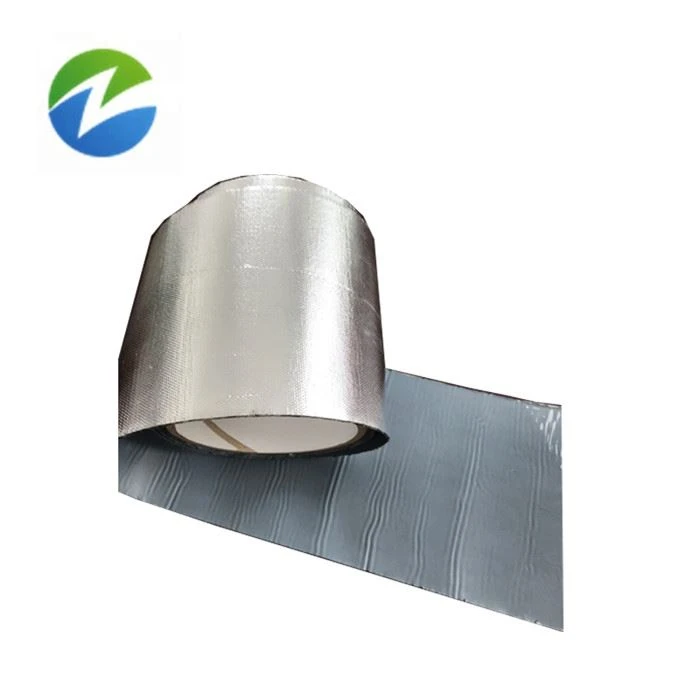
Reinforced foil-faced tape can protect sealed insulation joints and jacket laps.
Understand The Condensation Risk
Water vapor moves toward a cold surface when vapor pressure and temperature conditions permit. If it reaches a surface below the dew point, moisture can condense inside the insulation system. Repeated wetting reduces performance and can promote corrosion under insulation.
Identify operating temperature, ambient humidity, outdoor exposure and shutdown cycles. Intermittent systems may experience changing vapor drive, so joints must remain sealed through movement.
Match Tape To Jacket And Insulation
Foil-scrim-kraft, aluminum, PVC and elastomeric insulation systems need different accessories. Confirm adhesion, plasticizer compatibility, fire-performance requirements and facing permeability with the system manufacturer.
Use a reinforced facing where the joint needs puncture resistance. Select enough width to bridge the seam and maintain a bonded margin on both sides. Tight elbows and valves may require prefabricated covers or mastic rather than forcing flat tape over a compound shape.
| Detail | Moisture Risk | Control |
|---|---|---|
| Longitudinal jacket seam | Continuous vapor path | Seal the full length with uniform bonded margins. |
| Elbow | Wrinkles and bridging | Use shaped pieces or an approved fitting cover. |
| Pipe hanger | Irregular penetration | Integrate a compatible boot or mastic detail. |
| Valve box | Repeated access | Provide a resealable approved vapor-retarder closure. |

Match facing, width and flexibility to the pipe jacket and service environment.
Prepare A Clean Sealing Surface
The jacket must be dry, clean and firmly attached. Remove dust, oil, release film and loose fibers. Do not tape directly over condensation; stop the system if necessary and allow the area to dry under controlled conditions.
Repair crushed or wet insulation before sealing. A neat exterior patch can hide a continuing moisture problem. Use primer only when approved for the facing and vapor-retarder system.
Seal Seams And Penetrations Continuously
- Close insulation joints tightly without compressing the thermal layer excessively.
- Position jacket laps according to the system detail.
- Apply tape without stretching.
- Roll along the seam and across both edges.
- Use fitted pieces around hangers and penetrations.
- Connect every patch to the surrounding vapor retarder.
At pipe supports, valves and instruments, plan removable access without leaving open vapor paths. Use compatible boots, covers or termination mastics where tape alone cannot form a stress-free seal.
Protect Outdoor Insulation
Outdoor systems add UV, rain, wind and mechanical damage to the vapor-control requirement. Use a facing and jacket construction rated for the exposure. Arrange laps to shed water and avoid upward-facing edges.
Inspect after commissioning when the line reaches operating temperature. Look for condensation, frosting, edge lift and jacket dents. Correct damage promptly before moisture spreads along the insulation.

Conformable mastic helps close irregular transitions when used within an approved system.
RFQ And Quality-Control Checklist
- Pipe operating and ambient conditions.
- Insulation and jacket materials.
- Indoor, washdown or outdoor exposure.
- Required vapor, fire and smoke performance.
- Tape width, facing and reinforcement.
- Application-temperature range.
- Sample assembly and condensation inspection.
Related Product Resources
For specification comparisons, review the butyl tape range, single-sided butyl tape category, double-sided butyl sealants, waterproof tape range and sealant tape options. Confirm the selected construction against the real substrate and service conditions.
FAQ
Can Tape Be Applied Over Wet Pipe Insulation?
No. Identify the moisture source, replace wet material as required and dry the sealing surface before closing the system.
Is Aluminum Tape Automatically A Vapor Barrier?
Not by itself. Performance depends on the facing, adhesive, seams, penetrations and connection to the surrounding vapor retarder.
Should You Stretch Tape Around An Elbow?
No. Stretching can thin the adhesive and pull edges back. Use shaped pieces or a compatible fitting cover.
How Wide Should Vapor Barrier Tape Be?
It must provide the bonded margin specified by the insulation system on both sides of the joint. Geometry and exposure determine the exact width.
How Do You Check The Finished System?
Inspect every seam and penetration, then check for condensation or frost after the pipe reaches operating conditions.
Final Recommendation
Specify the complete insulation closure, including fittings and supports. Compare Zhonghao aluminum foil fiberglass butyl tape, butyl aluminum tape and butyl mastic tape, then test the assembled vapor-retarder detail.