



butyl tape for HVAC duct flange sealing can seal selected low-movement flange interfaces and exterior insulation seams when the construction matches the duct pressure, temperature and fire requirements.
Your team should distinguish an internal compressed flange seal from an external faced tape. The two products perform different jobs, and neither substitutes for missing fasteners, misaligned connectors or an unapproved fire-rated penetration system.
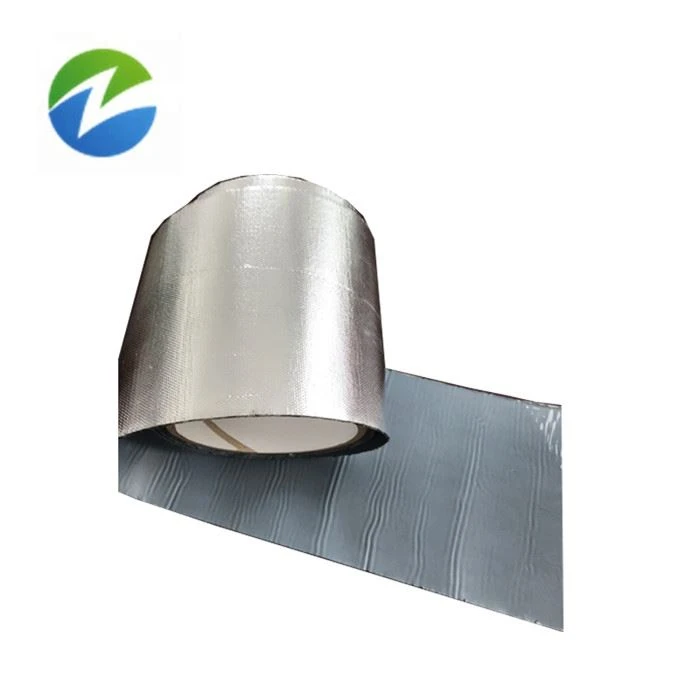
Reinforced foil-faced tape supports selected insulation-jacket and vapor-seal details.
Classify Each Duct Joint
Record duct pressure class, positive or negative pressure, air temperature, exterior exposure and cleaning regime. Flange joints, longitudinal seams, access doors and insulation jackets require different materials.
Check project specifications for flame spread, smoke development and code listing. Do not extend general-purpose tape through a rated wall or use it inside an air stream unless that exact application is approved.
Choose Compression Or Faced Tape
A preformed butyl profile inside a flange relies on fastener or corner pressure. Its cross-section must fill the sealing land without holding connectors apart. A faced tape covers an exterior seam and needs suitable backing strength and edge stability.
For below-ambient ducts, connect the tape to the complete vapor retarder. For hot ducts, verify continuous service temperature at the joint rather than relying on a short-term heat-resistance claim.
| Location | Main Requirement | Selection Check |
|---|---|---|
| Flange interior | Uniform compression | Match profile to sealing land and fastener spacing. |
| Exterior seam | Weather and edge stability | Use a compatible reinforced facing. |
| Cold-duct jacket | Vapor continuity | Connect all laps and penetrations. |
| Access door | Repeated opening | Retain the approved serviceable gasket design. |

A preformed profile produces controlled compression inside a compatible flange.
Prepare Galvanized And Coated Surfaces
Remove fabrication oil, dust, condensation and loose oxidation using an approved cleaner. Protective film must not remain beneath the sealing land. Dry the metal and insulation jacket before application.
Trial adhesion on coated or weathered sheet. On exterior ducts, check compatibility with mastics, jacketing and previous repairs so the new adhesive does not depend on a weak old layer.
Assemble The Flange Joint
- Confirm flange alignment and corner hardware.
- Place a continuous profile without stretching.
- Join ends without leaving a channel.
- Tighten fasteners in the specified sequence.
- Install cleats or clamps at required spacing.
- Inspect compression before adding insulation.
At access panels, keep compound clear of hinges and latches. Preserve the replaceable gasket function where the door is opened routinely.
Test Leakage And Condensation
Use the project leakage-test procedure at the specified pressure. Soap solution, smoke or instrumented tests must be compatible with the duct and cleanliness requirements. Repair the actual discontinuity rather than covering a large area blindly.
For cold ducts, inspect after operating conditions stabilize. Condensation at a seam can indicate a break in the vapor retarder, compressed insulation or thermal bridging beyond the taped joint.

Weather-facing tape protects selected exterior duct and insulation transitions.
HVAC Buyer Checklist
- Duct material and pressure class.
- Air and exterior temperature range.
- Flange type and sealing-land dimensions.
- Required fire and smoke classifications.
- Indoor, outdoor or washdown exposure.
- Insulation and jacket compatibility.
- Leakage-test pressure and acceptance limit.
Related Product Resources
Compare the butyl tape range, single-sided butyl tapes, double-sided butyl sealants, waterproof tape range and industrial sealant tapes. Validate the selected construction on the actual substrate and joint.
FAQ
Can Butyl Tape Replace Duct Fasteners?
No. Mechanical connectors establish alignment and compression. Tape only performs its specified sealing function.
Is Every Foil Tape Suitable For HVAC Use?
No. Confirm temperature, fire, smoke, pressure and environmental requirements for the exact construction.
Can You Apply Tape Over Condensation?
No. Dry the surface and correct the vapor or insulation defect that caused the moisture.
Does A Thicker Bead Always Seal Better?
No. An oversized bead can prevent flange seating. Use dimensions supported by the joint design and trials.
How Should A Duct Joint Be Verified?
Inspect assembly quality and conduct the specified leakage test at its stated pressure and acceptance criteria.
Final Thoughts
Specify flange compression and exterior weather sealing separately. Review Zhonghao fiberglass-reinforced aluminum tape, multi-purpose butyl rope and butyl aluminum tape, then test the assembled duct joint.