



Automotive butyl tape is a flexible, non-hardening seal used in vehicle assemblies and repairs where water, air, dust or vibration can pass through a joint. Common uses include door vapor barriers, rear-lamp housings, speaker surrounds, access panels, trim and selected glass-sealing details.
The correct product is chosen by joint geometry and compression-not simply by ordering the stickiest roll. A tape that is too soft may squeeze out in heat, while one that is too firm may not fill an irregular flange.
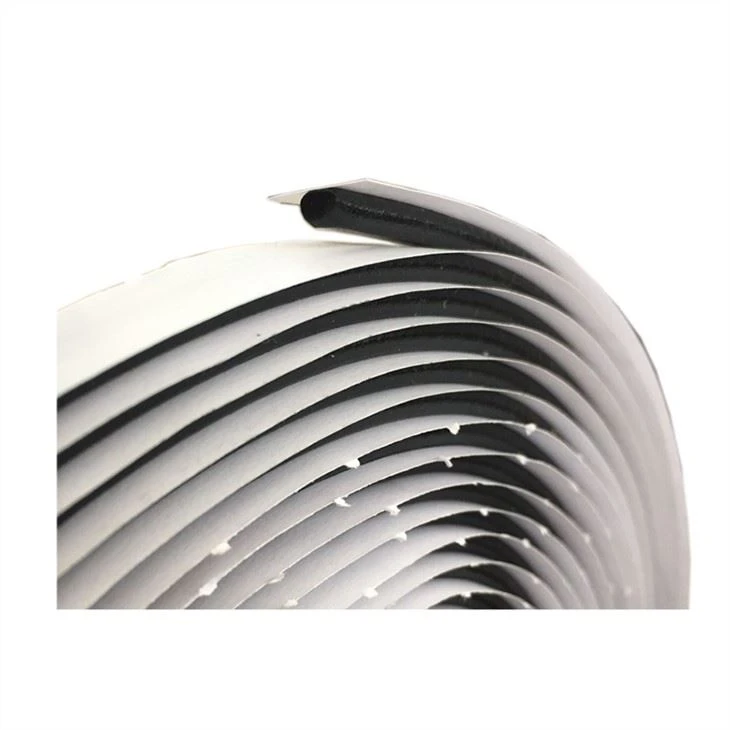
Automotive butyl tape is supplied in rolls or preformed profiles for controlled placement.
Where Automotive Butyl Tape Is Used
| Application | Preferred Behavior | Buyer Check |
|---|---|---|
| Door vapor barrier | High tack with repositionable, non-curing seal | Clean removal and reassembly behavior. |
| Tail light or headlight housing | Conformability and heat-cycle stability | Profile diameter and squeeze-out. |
| Trim and access panels | Vibration damping and gap filling | Compression after fasteners are tightened. |
| Glass-related sealing | Consistent bead geometry | Use only where the vehicle repair procedure permits it. |
Select The Profile By Joint Geometry
Butyl rope is helpful for curved housings and channels because it follows complex paths. Flat tape is faster on flanges and broad seams. Measure the channel depth and compressed gap, then trial two nearby sizes. After assembly, the butyl should show continuous contact without excessive squeeze-out.
Color can matter in visible lamp or trim joints. Black is common in automotive work, while gray may suit other assemblies. For production orders, specify width or diameter, thickness, roll length, liner, color and allowable dimensional tolerance.

Preformed profiles help technicians maintain a consistent sealing bead around a housing.
Surface Preparation And Installation
- Remove old sealant without damaging the flange or coating.
- Clean away oil, dust and loose residue; let the surface dry.
- Place the tape continuously without stretching it thin.
- Join the ends with a slight overlap or approved splice.
- Assemble the parts evenly so compression develops around the full perimeter.
- Inspect for gaps and perform the appropriate leak test.
Temperature And Vibration Matter
Vehicle parts can cycle from winter cold to high temperatures behind glass or near lamps. Ask for heat-aging and low-temperature flexibility information. A useful sample test includes several hot-cold cycles followed by inspection for edge movement, cracking, loss of contact and excessive flow.
Vibration tests should use the real assembly, because fastener spacing and flange stiffness influence the seal. Butyl can also reduce rattles, but it should not be treated as a structural adhesive unless the design separately provides mechanical retention.

Check the adhesive profile after compression to confirm continuous contact without uncontrolled flow.
OEM And Wholesale Checklist
- Confirm the intended vehicle component and operating environment.
- Approve a production sample in the actual channel or flange.
- Specify roll winding, liner release and splice limits.
- Define individual packing, labels, lot traceability and shelf-life marking.
- Keep the approved sample and acceptance criteria for repeat orders.
FAQ
Is Automotive Butyl Tape Waterproof?
It can form a strong water barrier when the joint is clean, continuously filled and correctly compressed. Validate the assembled component with a leak test.
Can It Be Reused After Opening A Door Panel?
Sometimes it remains workable, but contaminated, stretched or incomplete material should be replaced to restore a dependable seal.
Is Butyl Tape Suitable For Every Windshield?
No. Modern glazing systems can require specific urethane adhesives and safety procedures. Follow the vehicle manufacturer's repair method.
Final Thoughts
The best automotive butyl tape matches the channel, compression, temperature cycle and repair process. Explore Zhonghao's automotive butyl tape and related sealant tape options for samples and custom packing.